Browse the mobility glossary →
Before you train a joint, find out what it can actually do. That is what an assessment is: a measure of how each joint moves — its range of motion, strength, and control — that sets the baseline for everything after it.
The simplest assessment tool I know is the Hip CAR. One slow rotation of the hip joint through its full range of motion, owning every inch. This is assessment, not exercise. Wherever your range ends, whatever feels stiff or weak or starts compensating — that is your starting point, not a failure.
This 25-minute routine strings that idea across the whole hip. Follow along and treat every movement as a question: how far does this joint go today? Your available range changes day to day, and the routine tells you where you are right now. That is the baseline your training gets built on.
What to watch for
- 3:55, low lunge. If your back knee starts to bend, you’re compensating. Back off until the hip does the work.
- 6:50, runner’s lunge. If your thigh and ribs open up, you’ve gone too far.
- 10:34, seated hip flexion. Pull belly to thigh. Where it won’t close is your current end range of hip flexion.
- 11:39, standing leg lift. Most people stop around hip height. Full hip flexion closes the joint completely.
- 12:28, reverse table. How high you can lift shows your current hip extension.
- 12:56, single-leg reverse table. If your hips sag, that’s your current extension limit.
- 23:40, 90-90 transitions. Only progress if you have the range. “Like we’re doing a mini assessment.”
Once you know your baseline, the work gets simple: train what you found. That is the whole idea behind training for the next 30 years. You keep measuring, and the program keeps fitting the body you have.
Related: How to Do the Hip CAR · How to Do a Shoulder CAR · Hip CAR · Shoulder CAR
Want a trained eye on your baseline? Book a free 20-minute intro. It is a short version of a full assessment, and we will map out exactly where to start. Book your free intro →
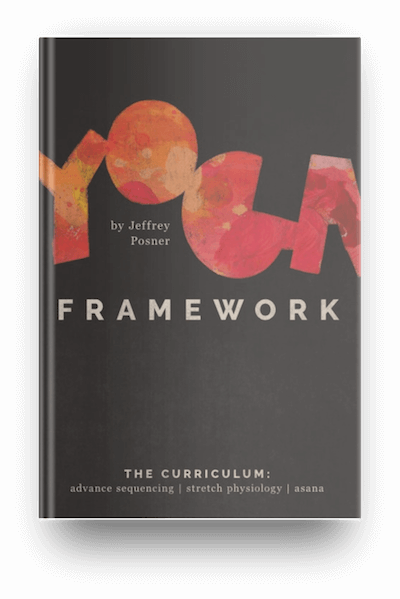
Want the full system? Yoga Framework | The Textbook lays out the method behind all of this. Get the book →
A measure of what a joint can actually do: its range of motion, strength, and control. It sets the baseline that training gets built on, so the program fits the body you have.
25 minutes, following the guided video. Treat every movement as a question about how far the joint goes today.
Just floor space and the video. No equipment. The routine covers low lunge, runner’s lunge, seated hip flexion, standing leg lift, reverse table, and 90-90 transitions.
Train what you found. Wherever your range ended or compensation started, that is your starting point. Keep measuring over time and the program keeps fitting the body you have.